


Adaptive streaming by default
Every video is automatically packaged for HLS delivery with an adaptive bitrate ladder up to 4K, created on-demand via JIT transcoding. No encoding setup, no quality-ladder configuration, no ongoing maintenance.

Upload, store, encode, and deliver video with one API. No format, protocol, or encoding expertise required from your development team.
Build scalable VOD streaming pipelines with Rabata. Just upload, stream, and scale.
Building a video pipeline in-house means managing encoding workflows, storage, CDN delivery, and playback — each as a separate system with its own overhead. Teams either overbuild complex infrastructure or get locked into platforms with unpredictable, stacked pricing dimensions.
Encoding, storage, CDN, and playback are separate layers to set up and coordinate
Encoding, storage, delivery, and resolution tiers billed as separate line items
Adaptive bitrate pipelines require ongoing infrastructure and tuning
Rabata replaces your entire video stack with one API and a bill built from exactly two numbers: storage and delivery — with standard transcoding included at no extra charge.



One API replaces encoding pipelines, storage layers, and delivery infrastructure.
Send video files to Rabata via API or dashboard. Files land directly in Rabata S3 storage — no intermediate buckets, no manual configuration. Supports MP4, MOV, AVI, MKV, WebM, FLV, WMV, M4V, 3GP, and OGV, up to 10 GB per file.
On first playback request, Rabata transcodes your video using JIT (Just-In-Time) processing. No rendering queues, no pre-transcode step. HLS adaptive bitrate output — up to 4K — is generated automatically. Your stream is ready within minutes of upload.
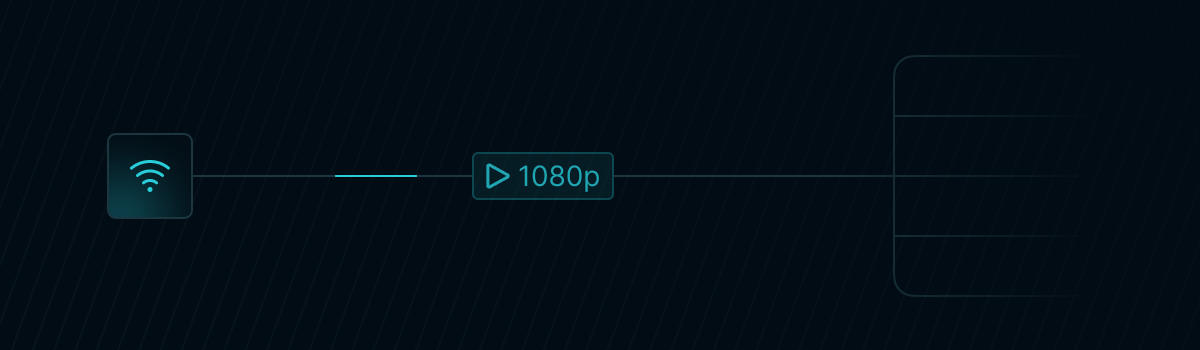
Video is served through a global CDN network. Viewers get adaptive bitrate playback (HLS) that adjusts to their connection automatically — across web players, mobile applications, and OTT platforms.
Every video is automatically packaged for HLS delivery with an adaptive bitrate ladder up to 4K, created on-demand via JIT transcoding. No encoding setup, no quality-ladder configuration, no ongoing maintenance.

Video is processed on first request using Just-In-Time transcoding. No encoding queues, no pre-transcode workflows. Upload once — stream within minutes.

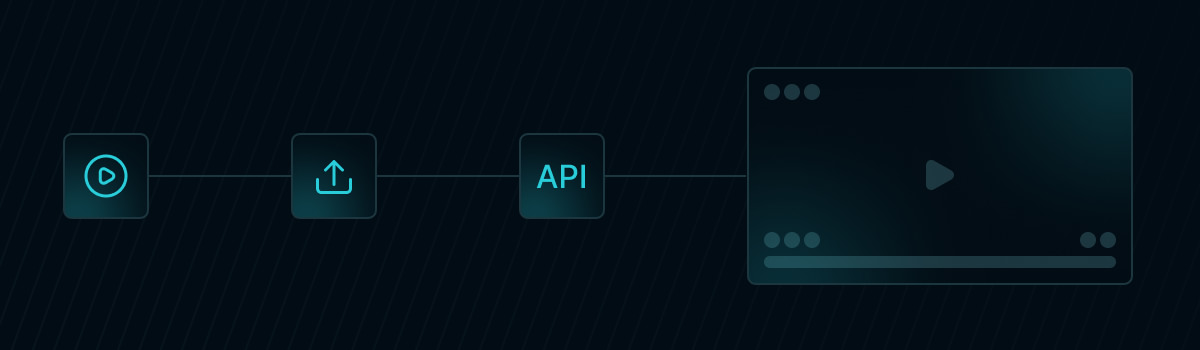
Upload, manage, and deliver video via a full REST API. Webhooks, signed URLs, and unlimited team members come standard — no feature gating, no forced upgrades.
Store video using a standard S3-compatible API. Your existing tools (SDKs, CLI, infrastructure scripts) work without changes.
Vidstack player included with full HLS/DASH support, captions, accessibility (WCAG 2.2), and analytics events. Embed via iframe or plug HLS into your own player — your choice.
Upload WebVTT or SubRip captions in multiple languages (up to 30 per video), and set a custom thumbnail for every asset.
Storage is billed by GB-month; delivery is billed by the minute and resolution. Two numbers to track, from day one. See exact resolution-based rates on the pricing page.
Fully managed pipeline — no infrastructure to deploy or maintain.
Video upload (REST API or dashboard)
Rabata S3-compatible storage
JIT transcoding on first request
Adaptive HLS packaging (up to 4K)
Global CDN delivery
Adaptive bitrate playback
Web players / mobile applications / OTT platforms
Rabata is built for streaming workflows where access control is not optional.
All API requests use authenticated API keys, giving you full control over what's exposed.

Generate signed URLs with expiry for time-limited streaming access, protecting against hotlinking and unauthorized embedding.
Video assets are stored on Rabata S3 infrastructure with encryption at rest.
Define per-asset or per-project access rules, restricting playback to authenticated users, specific domains, or approved environments.

Most streaming platforms bill across several dimensions — minutes stored, minutes delivered, resolution tiers, add-ons. Rabata bills for two: what you store, and what you deliver.
|
Feature
|
Rabata
|
Vimeo
|
Mux
|
Cloudflare Stream
|
|---|---|---|---|---|
| Pricing model | Usage-only (storage + delivery) | Per seat | Usage-based (per minute) | Usage-based (per minute) |
| Credit card required to start | $20 in credits, no card required | 7-day trial, card required upfront | Free tier, no card, capped at $20/mo, 10 videos, Mux logo on player | No free tier — $5 minimum charge from the first storage minute |
| Per-seat fees | No | Yes | No | No |
| Per-minute billing | Delivery only | No | Yes | Yes |
| Delivery pricing | $0.60–$2.50 / 1,000 min, by resolution | Capped at 2TB/month — overage requires Enterprise sales | $0.80–$3.20 / 1,000 min, by resolution (base rate; drops at high volume) | $1.00 / 1,000 min (720p–1080p only, no 2K/4K) |
| Storage pricing | $0.006/GB-month | Included per plan | Per-minute stored | Per-minute stored |
| Captions & thumbnails | Included | Included per plan | Add-on | Add-on |
| Full API access | Yes, on every plan | Limited by tier | Yes | Yes (infra-level) |
| Cost predictability | High — two line items, no markup layers | Medium | Low | Medium |
| Platform stability | Independent | Acquired by Bending Spoons in 2026 | Independent | Independent |
Pay for source storage and delivered minutes. Standard on-demand transcoding is included.
Standard JIT renditions are created when viewers request them.
A cloud video streaming platform handles the full pipeline — storing, encoding, and delivering video for on-demand playback — without you managing the infrastructure. Upload via API, automatic JIT transcoding on first request, and global CDN delivery with adaptive bitrate playback out of the box.
Yes. The REST API supports programmatic upload, metadata management, playback URL generation, and webhooks. Signed URLs and access control policies are included. Video is served via global CDN for consistent performance across web, mobile, and OTT environments.
There's no fixed monthly plan. Source storage is $0.006 per GB-month. Delivery starts at $0.60 per 1,000 delivered minutes and varies by resolution (up to 4K). Standard on-demand transcoding is included at no extra charge. New accounts start with $20 in credits.
Upload a video via REST API or dashboard. On first playback request, Rabata transcodes it using JIT processing — no queue, no pre-transcode step. Video is packaged as HLS with an adaptive bitrate ladder up to 4K and cached at the CDN edge for fast delivery to subsequent viewers.
Yes. Full REST API, webhooks, signed URLs, and S3-compatible storage are included, with no tier restrictions or plan upgrades required. Your existing S3 tooling — SDKs, CLI tools, infrastructure scripts — works without modification.
Storage and delivery scale automatically with usage — there's no plan to outgrow, no seat limits, no bandwidth hard caps.
