
Embed-ready video playback
Serve video directly inside WordPress pages, posts, course lessons, membership areas, and product pages. Keep users on the website instead of sending them to an external video platform.

Store, transcode, and deliver videos on your WordPress website without loading your web server with large media files.
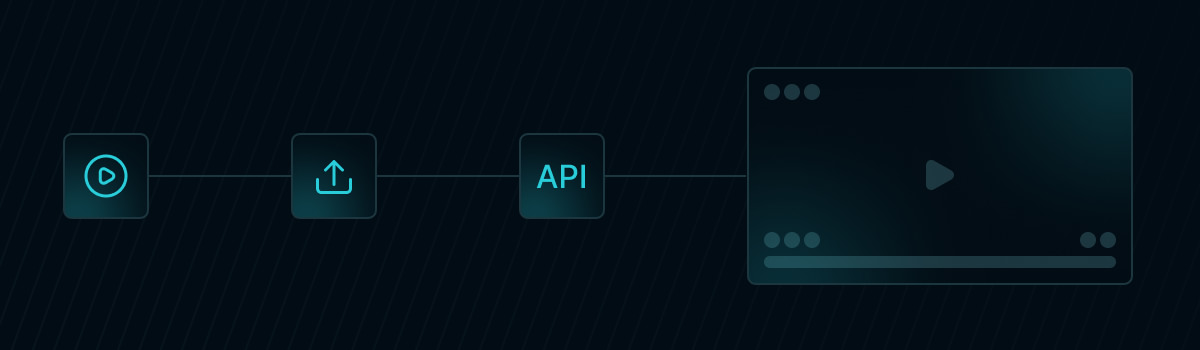
Upload video once, deliver it through a global CDN, embed playback directly into WordPress, and control access without building a separate video pipeline.
Embedded articles and feature videos for publishers.

Structured, sequential lecture playback for LMS sites.
Gated video content for paying members.
Demos and product videos on listing pages.

Tutorial and support content.
Conversion-focused video embeds for agencies and marketers.
WordPress can store video files directly, but large video libraries introduce infrastructure requirements that standard website hosting was not designed to handle efficiently.
Rabata separates video infrastructure from the WordPress application while keeping playback directly inside the website.
Serve video directly inside WordPress pages, posts, course lessons, membership areas, and product pages. Keep users on the website instead of sending them to an external video platform.

Store large video libraries outside wp-content/uploads using scalable S3-compatible object storage.

Process video on demand using Just-In-Time transcoding without building and maintaining a separate encoding pipeline.
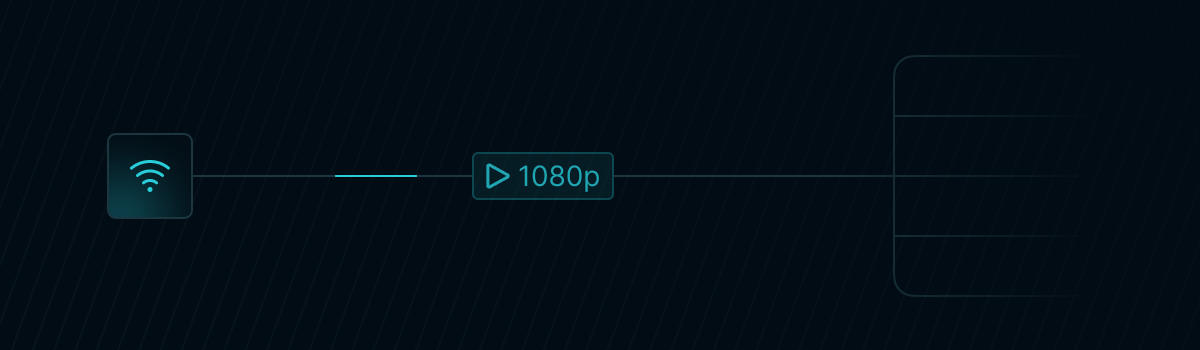
Deliver video through HLS and adaptive quality levels so playback can adjust to different devices and connection speeds.
Use signed URLs, token-based access, and delivery restrictions for content that should not be publicly accessible.
Serve video through distributed delivery infrastructure rather than directly from the WordPress origin server.
Automate upload, video management, transcoding, playback, and delivery workflows through API and webhooks.
Pay for source storage and delivered minutes. Standard on-demand transcoding is included. No fixed plan.
Standard JIT renditions are created when viewers request them.
Rabata playback can be added wherever the WordPress environment supports the required embed, iframe, custom HTML, or compatible video player workflow.
Upload video (Rabata dashboard or API)
S3-compatible video storage
JIT transcoding
Access-controlled delivery layer (signed URLs / token authentication)
Global CDN
Playback inside WordPress (pages / posts / courses / membership areas / WooCommerce)
Uploading a video directly to the WordPress Media Library works for simple use cases. Dedicated video infrastructure becomes more important as the number of videos, viewers, or access requirements increase.
|
Feature
|
Rabata
|
WordPress self-hosting
|
|---|---|---|
| Video storage | Dedicated S3-compatible storage | Shares WordPress hosting storage |
| Video delivery | Global CDN infrastructure | Depends on web hosting setup |
| Transcoding | JIT transcoding | Requires separate processing |
| Adaptive streaming | HLS / adaptive delivery | Not provided by WordPress itself |
| Private playback | Signed URLs + access controls | Requires custom implementation or plugins |
| WordPress server load | Video infrastructure runs separately | Video served through website infrastructure |
| API workflows | API + webhooks | Depends on WordPress implementation |
| Scalability | Video storage and delivery scale separately | Tied to website hosting architecture |
WordPress should manage the website and content experience. Rabata handles the infrastructure behind video storage, processing, and delivery.
Infrastructure that stores, processes, and delivers video for a WordPress site instead of the WordPress server itself. Video is uploaded to S3-compatible storage, transcoded on demand, and delivered through a global CDN — while playback stays embedded directly inside your WordPress pages.
Rabata runs alongside WordPress, not inside it. Upload video via dashboard or API, then embed playback into any WordPress page or post using a standard iframe, custom HTML block, or compatible player integration. WordPress remains your CMS — Rabata handles storage, transcoding, and delivery.
Yes. Signed URLs and token-based access control who can view a video, independent of your WordPress login system. Content stays restricted to intended viewers rather than being served from a public media URL.
Yes. Video storage, transcoding, and delivery run on Rabata's infrastructure and global CDN — not your WordPress hosting server — so video traffic no longer competes with your site's regular traffic.
Yes. Every video is served through a global CDN, with adaptive HLS delivery that adjusts to the viewer's device and connection.
There's no fixed monthly plan. Source storage is $0.006 per GB-month. Delivery starts at $0.60 per 1,000 delivered minutes and varies by resolution (up to 4K), with standard on-demand transcoding included. New accounts start with $20 in credits. Full breakdown in the billing documentation.
Yes, through the Media Library — but large or growing video libraries consume hosting disk space and compete with website traffic for the same server resources. This works for a handful of videos; it becomes a bottleneck as a library grows.
Not currently. Rabata integrates with WordPress through standard embed, iframe, and API workflows rather than a dedicated plugin.
Yes. LMS and membership sites commonly need private, access-controlled video — Rabata's signed URL and access-control workflows fit that use case, working alongside whatever LMS or membership plugin manages your course or membership logic.
Yes. Video served through a CDN with adaptive delivery doesn't load through your WordPress server at all, which keeps your pages lighter and can improve load-time metrics that affect both user experience and search ranking.
Yes. Storage scales independently of your WordPress hosting plan — there's no disk quota tied to your website hosting to run into as your library grows.
