
S3-compatible API access
Support existing developer tools and automation workflows. Customers keep the SDKs, clients, and scripts they already use and change nothing but the endpoint.

Launch your own S3-compatible storage service under your brand without building storage infrastructure.
Control pricing, customer environments, and storage delivery workflows using a multi-tenant object storage backend designed for service providers and SaaS platforms.
Add object storage to hosting portfolios without infrastructure deployment.

Integrate S3-compatible storage as a backend for backup pipelines.
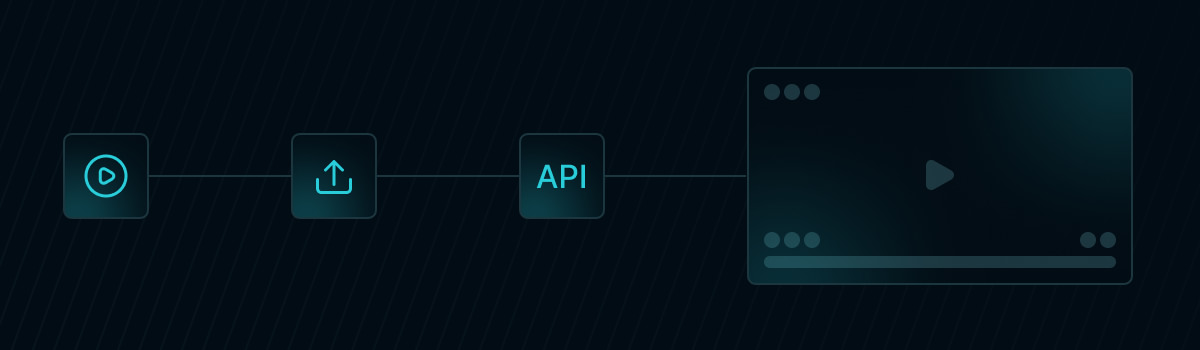
Store customer uploads and application assets using API-driven storage.
Manage datasets and model pipelines with scalable object storage.

Building object storage internally requires distributed infrastructure, billing systems, API compatibility layers, and customer isolation logic.
Operating storage clusters requires scaling, redundancy planning, and maintenance — capacity work that continues long after the service launches
Storage services must separate tenants securely across environments, with credentials and policies that never overlap between customers
Customers expect native S3-compatible tooling support. Anything less means rewriting client integrations before the first byte is stored
Rabata provides a production-ready white-label storage backend that enables providers to launch S3-compatible storage services without managing infrastructure.
Rabata delivers scalable object storage designed for integration into hosting platforms, SaaS products, and developer storage workflows.
Rabata acts as a storage backend layer that providers can deploy under their own brand.



Three steps from provisioning a tenant to selling storage under your own name.
Create isolated customer storage environments using multi-tenant architecture. Buckets, access keys, and policies are issued per tenant, so a new customer starts inside its own boundary rather than a shared namespace.
Connect hosting panels, SaaS platforms, or backup pipelines programmatically. Provisioning, key rotation, and usage collection run through the same API surface your automation already targets.
Offer object storage services directly to customers using your pricing model. Your domain, your plans, your support relationship — Rabata stays the infrastructure layer behind them.
Support existing developer tools and automation workflows. Customers keep the SDKs, clients, and scripts they already use and change nothing but the endpoint.

Separate customer environments with isolated buckets and policies, so tenant boundaries are part of the storage layer rather than something your application has to enforce.

Offer storage services under your own domain and pricing structure. The customer relationship, the branding, and the plan design stay yours.
Automate storage creation through API-based workflows. Bucket creation, credential issuing, and policy assignment fit into the signup flow you already run.
Expand storage capacity without managing hardware or clusters. Growth in customer volume does not turn into a redundancy planning project on your side.
Rabata integrates into existing storage ecosystems without vendor lock-in. Storage stays reachable through the same S3 API your customers already build against, so moving data in — or out — never depends on a proprietary client.
Offer object storage alongside VPS and hosting services as another line item in the control panel, provisioned by the same automation that creates hosting accounts.
Store customer backup archives using S3-compatible storage, with backup software writing directly to a tenant-scoped bucket.
Manage uploads, logs, and application assets programmatically, keeping each customer's objects in an environment of their own.
Store datasets and model training inputs at scale, reading them back through the S3 API from wherever the training jobs run.
Customer applications
Provider control panel / API layer
Rabata multi-tenant object storage backend
Isolated storage environments per customer
Reselling storage and pointing customers at a hyperscaler account are different businesses. The difference shows up in who sets the price, who carries the infrastructure, and whose brand the customer sees.
|
Feature
|
Rabata
|
AWS S3 (direct usage)
|
|---|---|---|
| Pricing control | Provider-defined | Hyperscaler-defined |
| Margin flexibility | Available for resellers | Limited |
| Infrastructure management | Handled by Rabata | Customer responsibility |
| Service branding | White-label deployment | AWS-branded service |
| Customer environment isolation | Multi-tenant provider control | Per-account structure only |
Direct hyperscaler usage keeps the storage relationship — and the branding — with the hyperscaler. A white-label backend keeps it with you.
White-label S3 storage is object storage infrastructure operated by one provider and resold by another under its own brand. The reseller defines the customer experience, the pricing model, and the support relationship, while the underlying storage clusters, replication, and S3 API layer are run by the infrastructure partner. Customers interact with an S3-compatible endpoint and never need to know who operates the hardware.
Yes. Rabata exposes an S3-compatible API, so AWS SDKs, command line clients, backup software, CI/CD pipelines, and infrastructure automation tools work by pointing at a Rabata endpoint with a Rabata access key and secret key. No proprietary connectors and no custom client libraries are involved.
Yes. Storage environments are separated per customer with isolated buckets, credentials, and access policies, so one tenant cannot read or modify another tenant's data. Provisioning and policy assignment are driven through the API, which keeps tenant separation part of the automated workflow rather than a manual configuration step.
By connecting an existing control panel or provisioning system to an S3-compatible backend instead of deploying storage clusters. Buckets and access keys are created programmatically per customer, the provider maps them to its own plans and billing, and storage is presented as part of the provider's product line alongside VPS, hosting, or backup services.
Yes. Rabata bills the provider for the storage service; the provider decides how to package and price it for its own customers — per plan, per gigabyte, bundled into a hosting tier, or included with a backup product. Retail pricing, plan structure, and billing cycles stay entirely under the provider's control.
Yes. SaaS platforms use Rabata as the storage layer behind user uploads, generated files, application assets, and logs. Because access is S3-compatible, the application code that already talks to object storage keeps working, and per-customer isolation can be modelled with separate buckets and scoped credentials.
